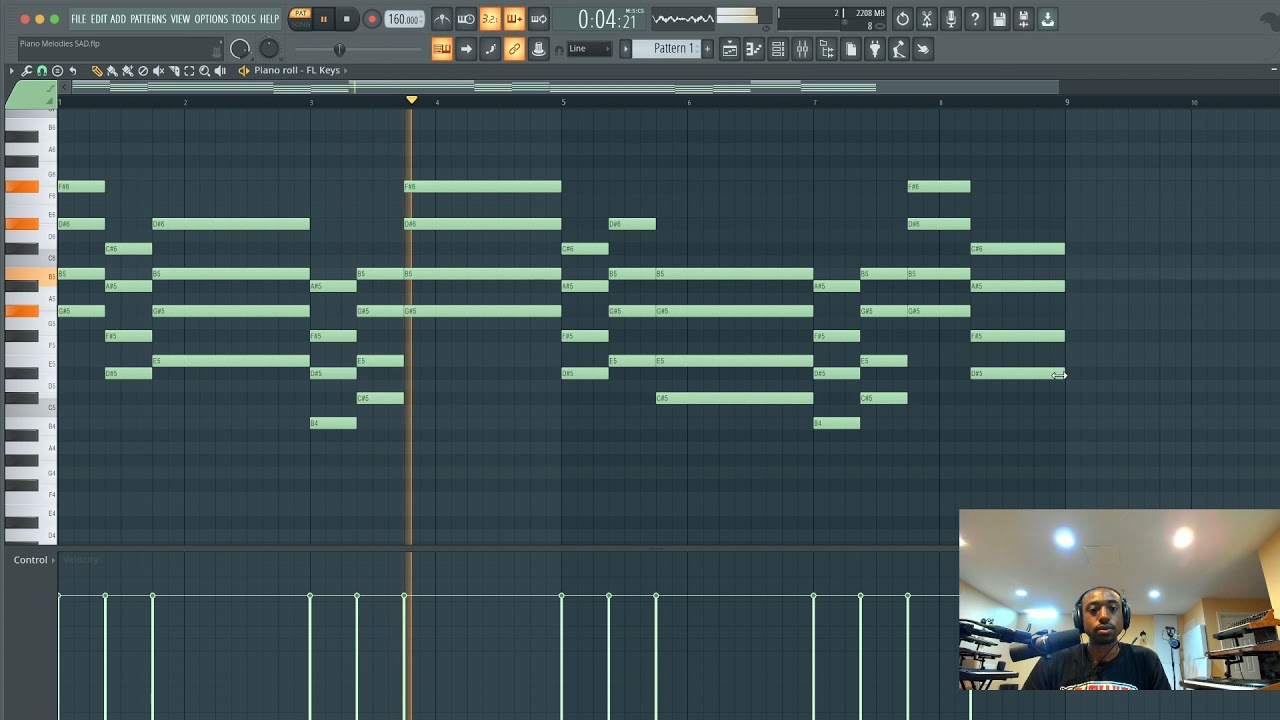
Writing Melodies for Trap: Dark, Atmospheric, and Memorable
Most weak trap melodies fail for the same reason - too many notes, not enough space. A melody that sticks usually leans on three or four notes repeated with small variations, not a constant stream of movement. Working out of my studio in Knoxville, the beats that get the strongest reaction from artists are almost always the simplest ones on top, with all the complexity living underneath in the drums and bass.
Start in a minor key, but don't stop there. Natural minor is the default trap sound for a reason - it reads as dark and moody without any extra work. But if every melody you write sits in the same scale, everything starts sounding the same. Try harmonic minor for a tighter, more tense feel, or dip into Phrygian dominant when you want something that leans exotic without going full cliche. Small scale changes are an easy way to make your catalog sound less repetitive.
Build the melody around the 808, not on top of it. In trap, the 808 usually carries the harmonic movement of the whole beat. If your lead melody clashes with where the 808 is sitting, the whole thing feels muddy no matter how clean your mix is. Write the 808 pattern first, or at least sketch it early, then build the melody to sit inside those notes instead of fighting them.
Use space as an instrument. Dense, constantly moving melodies read as busy, not skilled. Some of the most memorable trap melodies have more silence than notes - a phrase, a pause, then a variation on that same phrase. That pause is doing real work. It gives the listener's ear somewhere to land and makes the next phrase hit harder when it comes back in.
Layer texture instead of adding more notes. If a melody feels thin, the fix usually isn't more notes - it's more texture on the notes you already have. Try doubling the lead an octave up with a softer pad, or running a plate reverb send that only kicks in on the tail of each note. That kind of layering adds atmosphere without adding clutter, which is exactly what separates a beat that sounds professional from one that sounds crowded.
Reference before you commit. Pull up two or three records in the pocket you're going for and actually study what the melody is doing rhythmically, not just tonally. Are the phrases landing on the downbeat or dragging behind it? Is there a call-and-response happening between the melody and the hi-hats? Small rhythmic choices like that are usually what separates a forgettable loop from a beat people remember.
If you're working through this in your own sessions, start by muting everything except the 808 and the melody and see if those two elements alone tell a story. If they do, the rest of the arrangement is just support. Check the beat catalog at owlspec.com/beats to hear that approach in a finished record, or book a mix or master at owlspec.com/services if you've got a melody that needs the right space to sit in.